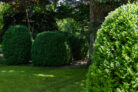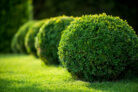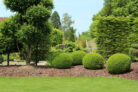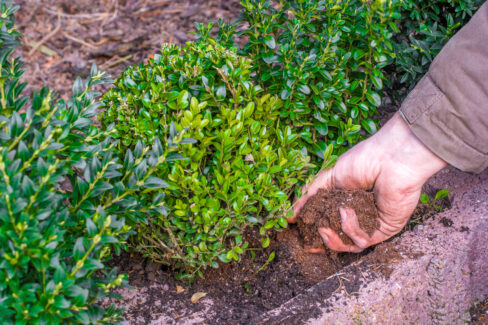
Boxwoods have the potential to live for a long, long time—we’re talking generations—as long as their roots are happy with the soil they’re sitting in! While you’ll definitely need to keep up with a regular feeding schedule, even the best fertilizer won’t save a plant stuck in a poor foundation. If you want a boxwood that thrives rather than just survives, here are the “must-have” ingredients for your soil.
Rich in Nutrients
Boxwoods are big fans of humus-rich soil packed with nutrients. If your garden soil is looking a little thin or “lean,” you’ll want to beef it up with plenty of mature compost before you even think about digging a planting hole. To keep that nutrient level high during the growing season, keep those compost applications coming. You can certainly use other fertilizers too, just keep an eye on the N-P-K ratio. These evergreens are especially hungry for nitrogen and potassium.
Excellent Drainage
Here’s another plant that absolutely hates “wet feet.” While you can control how much you water them, you can’t control a heavy rainstorm. For a boxwood to live a long life, the soil needs to be loose and well-draining. A sandy-loam mix is usually the sweet spot.
- If your soil is too heavy (clay), mix in some coarse sand to loosen it up.
- If it’s too sandy, mix in lots of compost to help it hold just enough moisture.
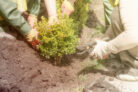
- Adding a drainage layer at the bottom of the hole is a great insurance policy for keeping roots dry.
The Ideal pH Level
Boxwoods are big fans of lime and actually prefer alkaline conditions. They should never be planted in acidic soil. Ideally, you’re looking for a pH range between 6.5 and 8. It’s a smart move to test your soil before planting and add lime if necessary. Since pH levels can shift over time—especially if you’re fertilizing your boxwoods with coffee grounds—re-test every few years. You can find cheap, easy-to-use testing strips at any garden center.
Pro Tip:
Many gardeners swear by calcified seaweed (Algenkalk). Not only is it a fantastic fertilizer, but it’s also been shown to help deter the boxwood moth and, according to recent findings, can even help fight off the dreaded boxwood blight.