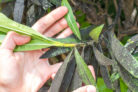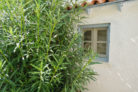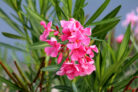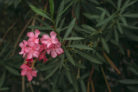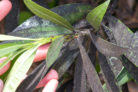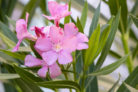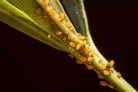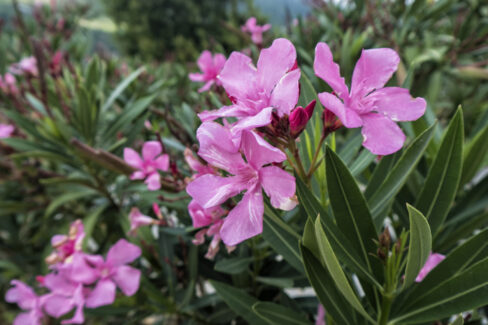
When your oleander is happy, its leaves are a gorgeous, glossy green. So, if you start noticing brown spots or discoloration, it’s usually a red flag that something is off with its care or health. Don’t worry, though! I’m here to help you figure out what’s going on and how to fix it.
Possible Causes for Brown Spots on Oleander Leaves
Most of the time, brown spots (and brown leaves in general) come down to “user error”—usually a hiccup in your care routine or the plant’s location. Here are the usual suspects:
- Not enough water or nutrients
- Over-fertilizing
- Poor winter storage conditions
- A run-in with Oleander Canker
Watering Woes and Nutrient Balance
Oleanders are thirsty plants! They need a steady supply of water and nutrients to stay vibrant. This goes for the winter, too—if the root ball dries out completely, the roots can’t send moisture up to the leaves, leading to those crispy spots.
On the flip side, be careful with the fertilizer. While they love to eat, too much of a good thing can cause “fertilizer burn,” which often shows up as brown edges on the leaves. Always follow the dosage on the label!
Dealing with Oleander Canker
If you see brown spots, you might be dealing with Oleander Canker. This isn’t just a care issue; it’s a bacterial infection that gets into the plant’s “circulatory system” (the sap).
Symptoms of Oleander Canker
The first signs are usually stunted flowers or buds that turn black. As it progresses, you’ll see those brown spots on the green leaves, and eventually, the stems will develop bumpy, wart-like growths.
How to Treat Oleander Canker
Unfortunately, there’s no “medicine” for this—you’ve got to grab your pruning shears. Cut back all the infected parts of the plant quite aggressively. If the infection has really taken over, your best bet is to cut the whole thing back to the base (rejuvenation pruning). The good news? Oleanders are tough. It will grow back, though it might take a season or two before you see those beautiful blooms again.
Quick Tip: What About Yellow Leaves?
If your leaves are turning yellow instead of brown, that’s usually a classic sign of dehydration or a lack of nutrients. Give your plant a good drink and a balanced meal, and it should perk right back up!