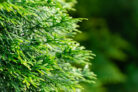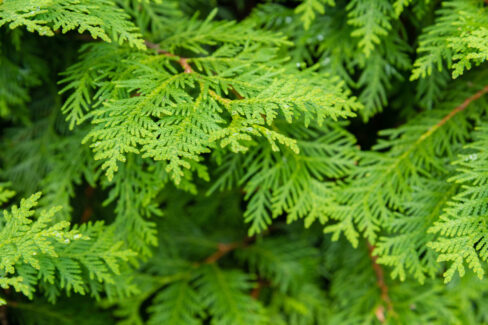
Arborvitae (Thuja) are known for being pretty low-maintenance and easy-going, which is exactly why they’re such a popular choice for privacy hedges. But when it comes to feeding them, “less is more” is the golden rule. These evergreens can be a bit sensitive, and over-fertilizing is a quick way to end up with a sick plant.
What’s the best fertilizer for Arborvitae?
In my experience, organic fertilizer is the way to go. It’s much harder to accidentally overdo it, and your plants will thank you for the steady, natural nutrient boost. Here are some great organic options:
- Mature compost
- Well-aged manure
- Horn meal or horn shavings
- A nice layer of natural mulch
If you’re using compost or manure, make sure it’s fully “done” and well-aged. Fresh stuff is too “hot” and can actually burn those delicate roots. I’m also a huge fan of mulching. Not only does it break down and feed the soil, but it also keeps moisture in the ground during those scorching summer months and acts as a natural weed barrier. You can make a great mulch layer using:
- Bark mulch
- Fallen leaves
- Straw
- Grass clippings (just make sure they’re weed-seed free!)
- Shredded clippings from your own Thuja trimmings
If you prefer mineral fertilizers, go for a specific conifer fertilizer or a balanced granular fertilizer (like Blaukorn). These come in both liquid and granular forms. You might hear people recommend Epsom salts (magnesium sulfate), but honestly, you should only use that if you’ve confirmed a magnesium deficiency with a soil test. Yellowing tips can be a sign of low magnesium, but it’s always best to check the soil before adding supplements.
When does an Arborvitae actually need food?
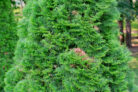
Arborvitae actually love spots with loose, slightly nutrient-poor soil. Because of this, established, full-grown trees rarely need extra fertilizer. However, young plants or newly planted hedges do appreciate a regular feeding schedule. Just remember to stay conservative—too much fertilizer can quickly lead to needle discoloration or brown tips.
When should you fertilize for the first time?
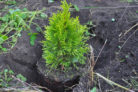
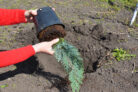
If you’re planting a Thuja that already has a solid root ball, it doesn’t need any fertilizer at all in its first year. For bare-root plants or those without an established root system, wait until they’ve developed fine feeder roots—usually about two to three weeks—before feeding. The plant can’t actually absorb nutrients until those roots are ready.
What’s the best time of year to fertilize?
Spring is the prime time to hit your trees with organic material or a slow-release mineral fertilizer. If they look like they need a little extra help, you can do a second round in late summer. If you’re using liquid fertilizer, you can apply it from spring through the end of summer. Just make sure to stop everything by autumn. You don’t want to encourage new growth right before winter; those tender new shoots won’t be hardy enough to survive the frost.
How to fertilize your Thuja the right way
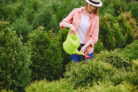
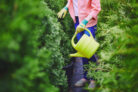
No matter what fertilizer you choose, always make sure the soil is moist first. If it’s dry, give your trees a good soak beforehand. You should also water them again after fertilizing to help the nutrients wash down into the soil where the roots can reach them. Here’s how to handle the different types:
- Organic fertilizer
- Conifer-specific fertilizer
- Granular mineral fertilizer (Blaukorn)
Using organic fertilizer
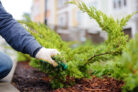
In the spring, spread your organic material around the base of the trees. Gently work it into the top layer of soil, but be careful! Arborvitae have shallow roots, and you don’t want to damage them with your garden tools.
You can also lay down your mulch in the spring. If it gets thin over the year, feel free to top it off again in the fall.
Using mineral conifer fertilizer
Slow-release granules for conifers should be applied in the spring, and they’ll usually keep the plant happy until fall. Be careful not to exceed the recommended amount on the package—Thujas do much better with a little too little than a little too much.
Liquid fertilizer is great because it’s so easy to dose. You can mix it into your watering can every two weeks from March through August. Again, stick to the manufacturer’s instructions, and when in doubt, lean toward a weaker dilution.
Using Blaukorn (Granular Fertilizer)
If you’re using a standard granular fertilizer like Blaukorn, you’ll want to apply it twice a year. Do the first round about two weeks before the first spring growth spurt, and the second round two to three months later. As always, it’s better to be a bit stingy with the dose than to overfeed.