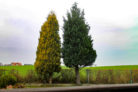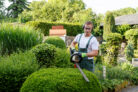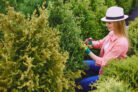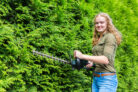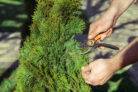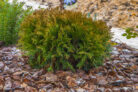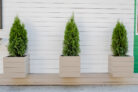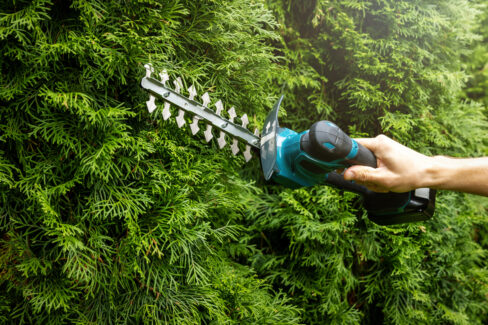
Thuja (or Arborvitae, as many of us call it) is actually pretty tough when it comes to pruning. But here’s the golden rule: if you cut back too far into the old, woody growth, it won’t grow back. That’s why a radical pruning job should really be your last resort. It’s much better to give your “Tree of Life” a light trim more often than one massive chop.
When does it make sense to cut back Thuja aggressively?
As long as you don’t hit the “old wood,” your hedge will handle a haircut just fine. But if you prune past the green needles, you’ll be left with permanent brown patches. Before you grab the heavy-duty loppers, ask yourself if the plant is truly beyond saving. Usually, a radical cut is only necessary for:
- Pest infestations or diseases
- Fungal infections
- Severe drying out
To keep your Arborvitae looking young and healthy, it’s best to trim it once or twice a year. Instead of waiting until it needs a total overhaul, try thinning it out occasionally to prevent it from getting too woody inside. This keeps your privacy hedge nice and thick!
How do you perform a heavy pruning on Arborvitae?
If you have to do a major cutback, timing is everything. Early spring, right before the new growth starts, is your best bet. Just a heads-up: if you’re dealing with a full hedge, be mindful of local nesting birds! Many areas have regulations about heavy pruning during the spring and summer to protect our feathered friends.
You also want to watch the weather. Direct sunlight on fresh cuts can cause “sunburn” and brown tips, which just stresses the plant out more. Pick a cloudy day that isn’t too rainy. You want the branches to be dry or only slightly damp; if they’re soaking wet, you’re basically rolling out the red carpet for fungi to move into those fresh cuts.
After a heavy prune, give your hedge a deep soak. A bit of organic fertilizer is also a great idea to help it bounce back. One last tip: if you’re cutting away diseased or infested branches, don’t put them in your compost pile! Toss them in the trash instead so the problem doesn’t spread. If the branches are just dry but healthy, the compost bin is perfectly fine.