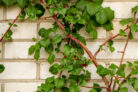
Ivy is a total pro at scaling walls, trees, and fences. As a “self-clinging” climber, it does all the heavy lifting itself without needing you to tie it up. The secret to its impressive grip lies in thousands of tiny aerial rootlets. But does ivy *always* have these little suckers, or can it live without them?
How Those Grip Roots Actually Work
The aerial roots on ivy serve one main purpose: locking the vines onto a surface. These are the tools that allow your ivy to climb high. Interestingly, they don’t handle the usual “root jobs” like drinking water, absorbing nutrients, or anchoring the plant in the soil—the main root system underground takes care of all that. Technically, this means the climbing roots aren’t vital for the plant’s survival, just for its vertical ambitions.
If you’ve ever looked closely at an ivy plant and noticed a lack of these little grippers, you might wonder if some varieties just don’t grow them. Let’s clear that up.
Why Your Ivy Might Be Missing Its Roots
To be honest, there’s no such thing as an ivy that can’t grow roots. Every ivy plant has the genetic blueprint to sprout them, but they don’t always show up on cue. Ivy only puts energy into growing these roots when it actually needs them. For the first 2-3 years after planting, ivy is usually focused on getting settled and won’t send out long, climbing vines. Since the stems are short and staying close to the ground, you won’t see many aerial roots yet.
Even once the growth spurt kicks in, the roots don’t just appear out of thin air. The vine needs to “feel” a surface first. Once it makes direct contact with a climbing support, the roots start sprouting to lock it down. It’s not picky, either—it’ll grab onto a smooth exterior wall, a stone boundary, or even just crawl along the bare ground.
One little quirk: Ivy loves the shade. If you have a bright white wall that reflects a lot of light and heat, the ivy might actually shy away from it, resulting in very few (if any) attachment roots in that spot.
Ivy Varieties with a “Lighter” Grip
While no ivy is completely root-free, some varieties are definitely less “clingy” than others:
- Irish Ivy grows fewer aerial roots than the common English Ivy. This actually makes it a bit easier to remove from walls if you ever change your mind.
- Persian (Caucasian) Ivy produces even fewer roots. Because its grip isn’t as intense, a very strong gust of wind can sometimes peel it right off its support.
Quick Tip:
If you’re growing the beautiful variegated Persian Ivy, it’s a good idea to give it a helping hand. Since its natural grip is a bit weaker, try securing the vines to your trellis or fence manually every so often to keep it stable.