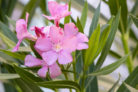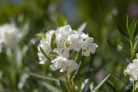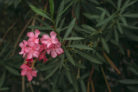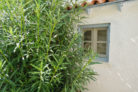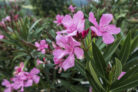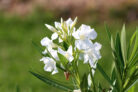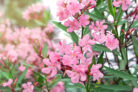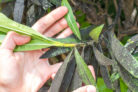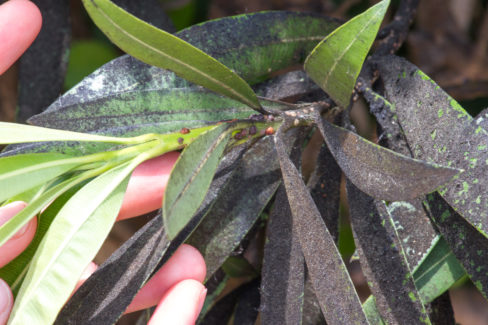
Healthy oleander leaves should be a vibrant, glossy green. If you notice yours are starting to look a bit dull or gray, don’t panic! It’s a common issue, but it definitely means your plant needs a little TLC. Let’s dive into what might be causing that gray tint and how you can fix it.
Common Culprits for Gray Oleander Leaves
If those shiny leaves suddenly turn gray or dusty-looking, there are usually a few usual suspects behind the scenes. Most of the time, you’re looking at:
- Spider mites
- Red spider mites
- Thrips
- Fungal infections like powdery mildew or gray mold (Botrytis)
Dealing with Spider Mites
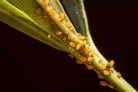
A tell-tale sign of spider mites is a fine, gray-white film or speckling on the leaves. You might also notice the foliage looking a bit stunted or “lifeless.” These tiny pests absolutely love warm, dry conditions.
To kick them to the curb, start by pruning away any heavily infested leaves. Since they hate moisture, give your oleander a good misting with water regularly to boost the humidity. Another pro-tip? Give them some airflow. While oleanders usually prefer a spot shielded from the wind, a little drafty air for a while won’t hurt the plant and will make life miserable for the mites.
Tackling Powdery Mildew
Often called “fair-weather mildew,” powdery mildew creates a white, flour-like coating on the leaves and stems.
A great DIY remedy for this is a simple mixture of fresh whole milk and water (use a 1:10 ratio). Spray this onto the affected areas regularly, and you’ll see a big difference!
Managing Gray Mold (Botrytis)
Just like powdery mildew, gray mold is a fungal infection. It’s particularly picky—it loves oleander varieties with double blooms, while single-bloom varieties usually stay safe.
Since gray mold mostly hangs out on the flowers, the best way to prevent it is to deadhead your plant thoroughly before overwintering. If there are no old flowers left, the fungus has nowhere to hide. Also, try to keep your oleander outdoors as long as possible in the fall and bring it back out early in the spring. The less time it spends in cramped winter storage, the less time pests and fungi have to settle in.