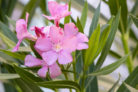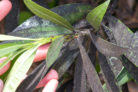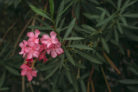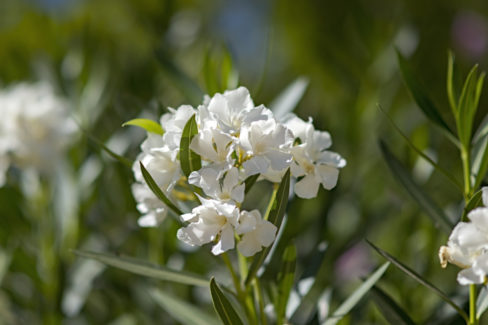
Oleanders are stunning, but they can be a bit dramatic when it comes to pests and diseases—especially fungi. If your plant is looking a little under the weather, don’t worry! I’ve put together a guide on the most common fungal infections you’ll run into and, more importantly, how to fix them.
Common Types of Fungal Infections
The usual suspects when it comes to oleander diseases caused by fungi are:
- Ascochyta leaf spot (Dry rot)
- Powdery mildew
- Gray mold (Botrytis)
Ascochyta Leaf Spot (Dry Rot)
If you notice dry, brown leaves and stems after bringing your plant out of winter storage, you might be dealing with Ascochyta.
The best way to fight this is with a radical pruning session. To prevent it in the first place, try spraying your oleander with a specialized fungicide from your local garden center before you tuck it away for the winter.
Powdery Mildew
On those gorgeous, hot, and sunny summer days, powdery mildew is in its element. It’s often called “fair-weather mildew” because it loves the heat. You’ll recognize it by a white, flour-like coating on the leaves and shoots. Fighting this fungus takes a lot of energy out of the plant, which often leads to leaves turning brown, drying up, and eventually falling off.
A great DIY remedy for powdery mildew is a simple mixture of fresh whole milk and water (use a 1:10 ratio). Just a heads-up: make sure you use fresh milk rather than UHT or long-life milk, as you need those live microorganisms to act as a natural fungicide!
Gray Mold (Botrytis)
Unlike powdery mildew, gray mold loves the damp, humid conditions of autumn. The most obvious sign is a fuzzy gray-white coating on the leaves, shoots, and flowers that looks exactly like typical mold.
To keep this at bay, make sure your oleander is completely dry before moving it into its winter quarters. It’s also a good idea to deadhead any spent or dried-up flowers before the move.
Your Best Weapon: The Pruning Shears
No matter which fungus is bothering your oleander, your trusty garden shears are your best friend. The most effective treatment is to generously prune back any infected parts of the plant. This stops the fungus from spreading further. Don’t be shy—oleanders are very hardy and handle pruning well; they’ll bounce back with fresh new growth in the spring. Just remember to wear gloves, as oleander is toxic and can irritate your skin!