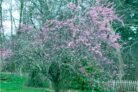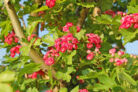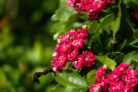
Pink Hawthorn (Rotdorn) and White Hawthorn are both members of the rose family and are very close cousins. Just like its white-flowering relative, the Pink Hawthorn produces edible fruits from its beautiful flower clusters. However, while White Hawthorn is usually loaded with red berries every year, seeing a heavy harvest on a Pink Hawthorn is actually pretty rare.
All About Pink Hawthorn Fruit
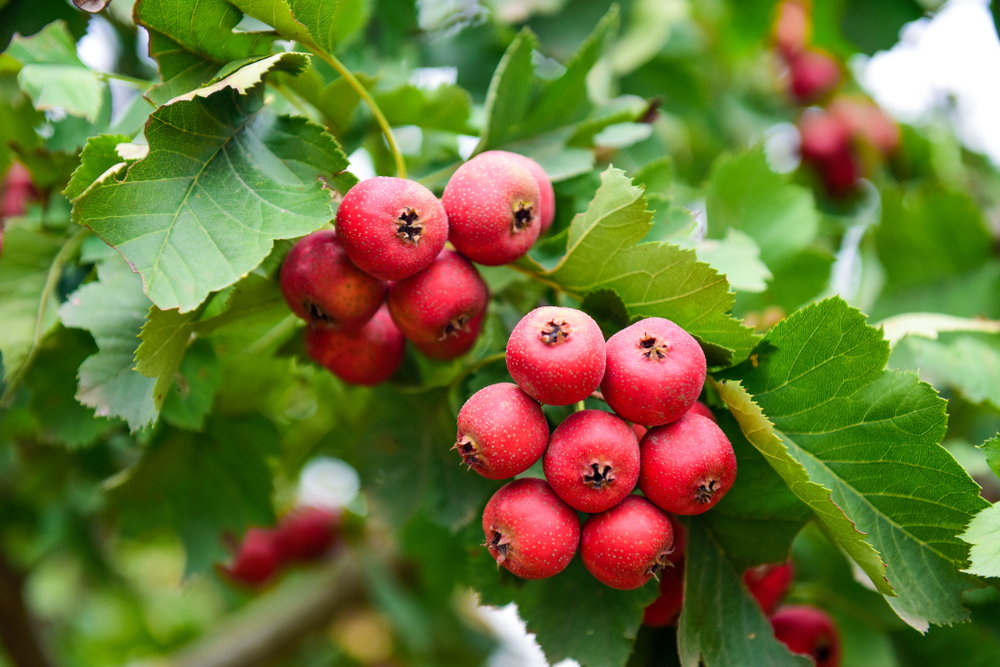
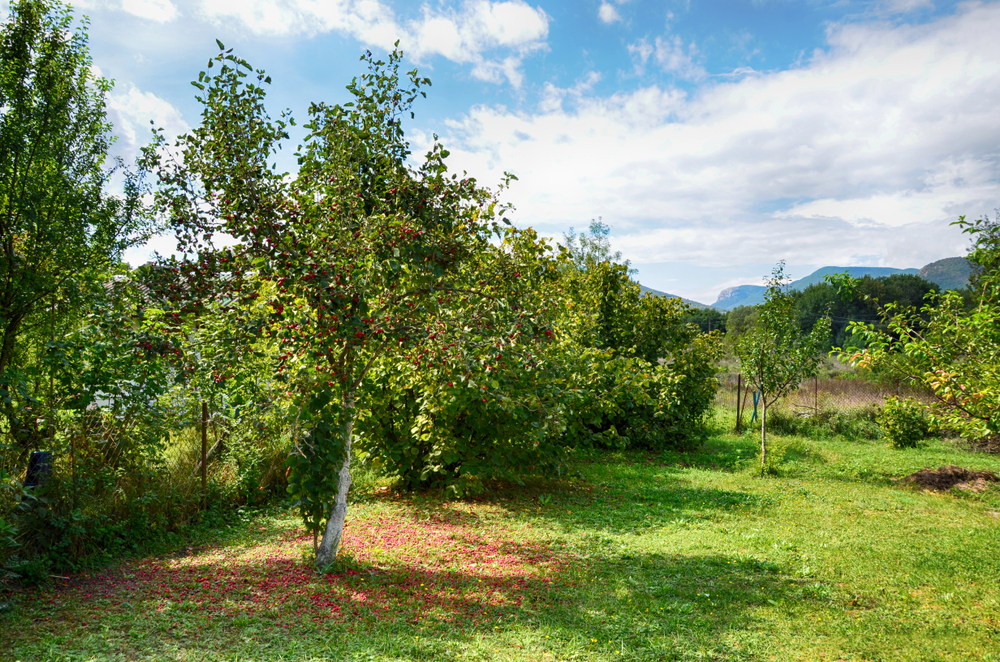
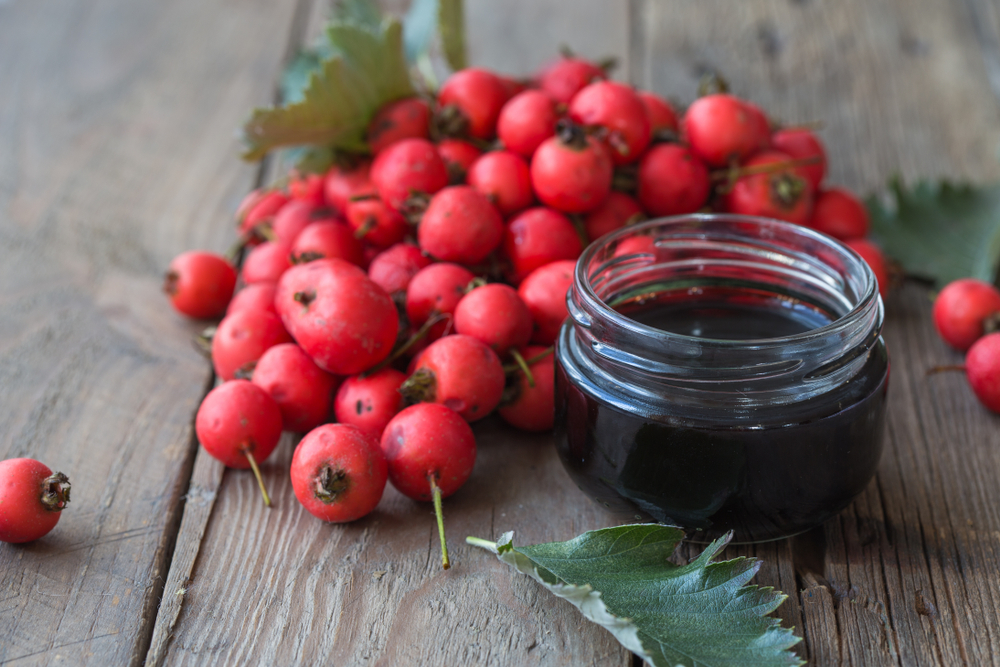
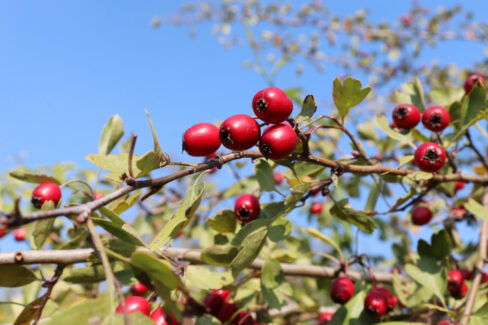
Since it’s part of the rose family—just like apple or pear trees—the Pink Hawthorn sprouts small red fruits in the fall that look like tiny, miniature apples. While they are technically edible, I’ll be honest: they don’t taste great on their own. They have a mealy texture and are quite sour. But don’t let that stop you! If you soak them in alcohol with a bit of sugar, you get a delicious homemade liqueur, or you can cook them down into a unique jam. Plus, the berry-laden branches look absolutely stunning in fall floral arrangements.
How the Fruit Develops
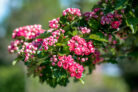
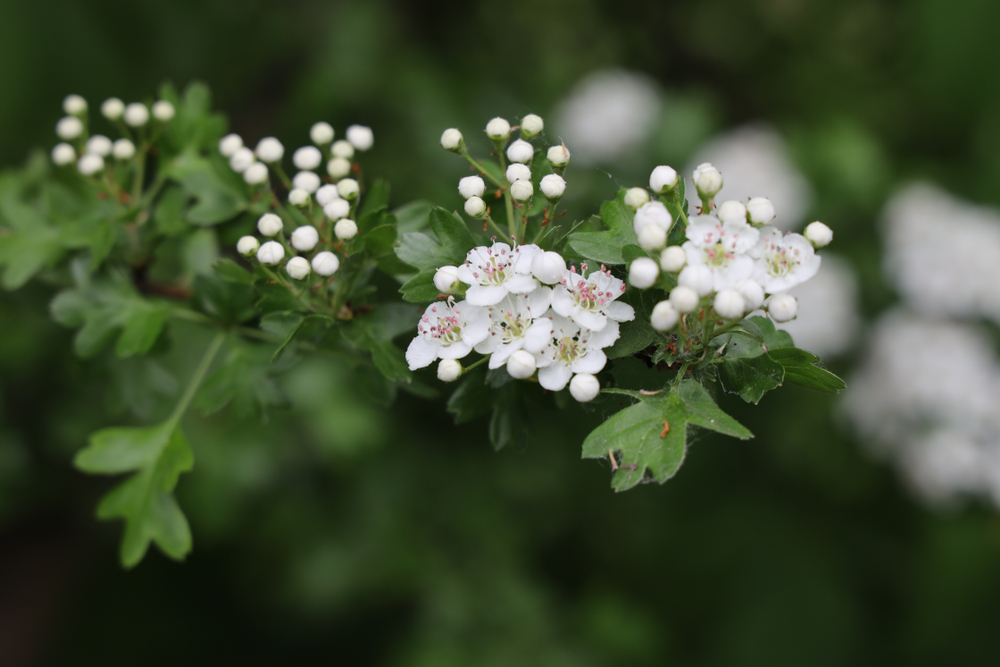
Those gorgeous crimson blossoms typically open up between May and June, hanging in heavy clusters at the ends of the branches. If you take a closer look at the flowers, you’ll notice they don’t have many stamens. That’s because, to a gardener’s delight, most of them have been bred to turn into extra petals. This is why Pink Hawthorns put on such an incredible, lush floral show.
Because of this breeding, fruit development is rare. But if your tree does produce those bright red “pome” fruits, they are safe to eat—just don’t go overboard. Eating a large amount of raw hawthorn berries can actually make you feel pretty lousy. If you snack on too many raw ones, you might deal with:
- Diarrhea
- Nausea
- Headaches
- Fever
The good news? Once the fruit is cooked or processed, these issues disappear, and it’s perfectly safe to enjoy.
How to Encourage Your Pink Hawthorn to Fruit
Even though these trees are bred for flowers rather than fruit, you can give yours a little nudge with the right TLC. First, make sure your tree or your hedge is living its best life in the right spot:
- A sunny location
- Nutrient-rich soil
- Moist, loamy ground
- A bit of lime in the soil
When a plant is healthy and well-fed, it’s much more likely to put its energy into making berries. To give it the best chance, make sure you do your annual pruning immediately after the flowers fade. This ensures you aren’t accidentally snipping off the developing fruit.
Finally, remember that nature needs a hand! A diverse insect population is key for pollination. You can help your hawthorn out by planting a wide variety of flowering plants nearby to invite bees and other pollinators into your garden.