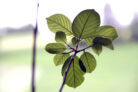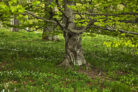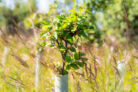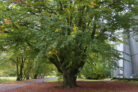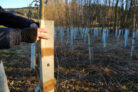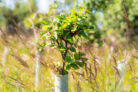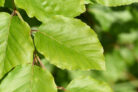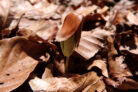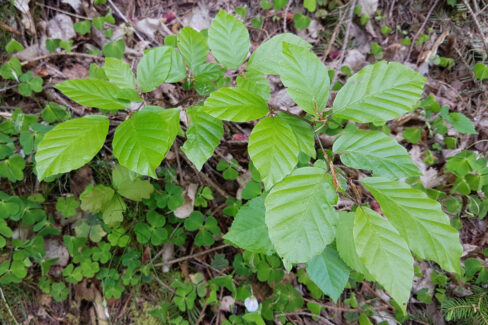
Planting a European Beech (Rotbuche) in your yard is a real legacy project. When you pick the right spot, this tree can thrive for generations, providing a massive canopy of shade for your kids, grandkids, and beyond.
The Best Time to Plant
Whether you’re looking to plant a single specimen tree or a long privacy hedge, autumn is hands-down the best time to get your European Beech in the ground. Early spring is a solid runner-up. Just avoid planting in the heat of summer—it’s simply too dry for the young roots to establish themselves properly.
Choosing Your Tree
Before you grab your shovel, you’ll need to pick out your plant. You’ll usually find a few different options at the nursery:
- Seedlings: These are very budget-friendly. They come bare-root and don’t have much branching yet.
- Heisters: These are young trees that have started to grow side branches but haven’t developed a full “crown” yet. Usually sold bare-root.
- Transplanted Heisters: These are older, well-branched saplings that have been moved a few times in the nursery to encourage a stronger root system.
- Established Saplings: These are several years old and come with a root ball (wrapped in burlap) or in a container. They look like a “finished” mini-tree.
Location, Location, Location
You really want to put some thought into where you plant it. Once a European Beech settles in, it does *not* like to be moved. Over the years, these trees become absolute giants—tall, wide, and with a massive root system to match. A good rule of thumb is to keep them at least 50 feet (15 meters) away from houses, paved walkways, or your neighbor’s property line.
How to Plant Your Beech
Ready to get your hands dirty? Here’s the step-by-step guide:
- Aim for October/November, or alternatively March/April.
- Pick a day when the ground isn’t frozen.
- Make sure the soil is moist.
- If you bought bare-root plants, soak the roots in water for a few hours before planting.
- For container or root-ball trees, remove all packaging/plastic.
- Snip off any damaged roots.
- Lightly trim any roots that are thicker than 1 cm (about half an inch).
- Dig a hole at least twice as wide as the root ball.
- Mix your soil with some compost and horn meal (or a slow-release organic fertilizer).
- Drive a sturdy support stake into the hole before the tree goes in.
- Place the tree in the center.
- Fill with soil and tamp it down firmly.
- Give it a very generous watering.
- Secure the trunk to the stake using soft garden twine or raffia.
- Keep watering daily for a while, but make sure the water can drain—you don’t want a swamp!
Ongoing Care
The European Beech is pretty low-maintenance once it’s established, but there are a few things to keep in mind. Young plants are sensitive to “wet feet” (standing water), which can cause root rot. While the tree is young, a little extra compost or horn meal in the spring is a nice boost. Once it’s older, it usually doesn’t need extra fertilizer. However, if your soil is naturally very acidic, you might want to add a little lime. Other than that, just sit back and watch it grow!