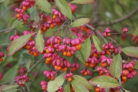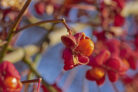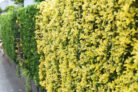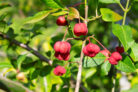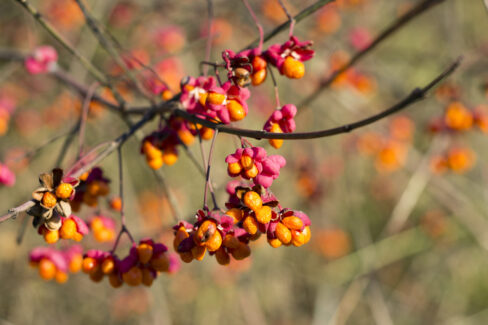
The European Spindle tree (or *Pfaffenhütchen*, as it’s known in Germany) is a stunning large shrub that really steals the show in the fall. You’ll often see it lighting up gardens, parks, and even natural hedgerows. But before you go digging a hole for one, it’s a good idea to get to know this plant a little better.
European Spindle Tree Quick Facts
Native to Europe, this large shrub is a favorite for landscaping but also thrives in the wild—usually hanging out in floodplains, along forest edges, or near riverbanks. Here’s the lowdown:
- Botanical name: Euonymus europaeus
- Common names: European Spindle, Spindle Tree
- Light: Full sun to partial shade
- Soil: Moist, alkaline (lime-rich)
- Growth habit: Upright and densely branched
- Height: Up to 20 feet
- Leaves: Oval to lance-shaped, 1–3 inches long, with finely toothed edges
- Fall color: Brilliant orange to scarlet red
- Bark: Gray-brown with unique, narrow corky ridges
- Flowers: Small, greenish, and pretty inconspicuous
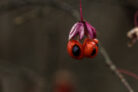
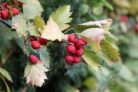
- Fruit: Starting in August, you’ll see bright carmine-red capsules with seeds wrapped in orange flesh
- Heads up: All parts of the plant are toxic
What Else Should You Know?
As a member of the Celastraceae family, this shrub loves soil that stays consistently moist. While it can handle the summer heat just fine, it’s not a fan of drought. If you’re hitting a dry spell, make sure to give it a good soak! When it comes to maintenance, it’s a total breeze. If it gets a bit too wild for your space, you can prune it back—it even handles a “hard prune” without skipping a beat. Just keep in mind it has a dense, heart-shaped root system that likes to send up new shoots.
This deciduous beauty is also a powerhouse for local wildlife. It’s a snack bar for butterflies, wild bees, and bumblebees, and provides a home for various beetles and bugs. Plus, those colorful autumn fruits are a favorite for birds, who help spread the seeds far and wide.
A Word on Toxicity
If you’re thinking about adding a Spindle tree to your yard, there’s one big thing to keep in mind: every part of this plant, especially the seeds, is highly toxic. If you have curious kids or pets running around, you might want to skip this one.
People have known about its toxicity for centuries (it’s even been used in some dark history!), though parts of it were used in traditional medicine way back when. The danger lies in those sweet-looking, fleshy fruits—if the seeds inside are eaten, the toxins kick in, though it can take up to 18 hours for symptoms to show. It can be fatal for pets, livestock, and even humans. Early signs of poisoning include:
- Stomach pain
- Nausea
- Diarrhea
- Vomiting