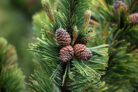
Ever look up at a spruce tree and wonder about those dangling cones? Just like apple trees have apples, conifers like the spruce produce fruit too—we just call them cones! These cones are where the seeds develop, and they have some pretty cool features that make the spruce unique. Let’s take a closer look at what makes a spruce cone, well, a spruce cone.
Cones are actually the fruit
Even though they don’t look like a juicy peach, cones are the official fruit of the spruce tree. Like many other evergreens, the spruce relies on these woody structures to protect and eventually release its seeds.
Key features and characteristics
Here’s a fun fact: the cones you see on a spruce tree actually develop from female flowers. The male flowers are much smaller and easy to miss, which means every spruce cone you find is technically female.
While they’re growing, these cones can be surprisingly colorful! Depending on the tree, they might start out green, bright red, or even a deep, dark blue (and in rare cases, almost black). As they ripen, they lose those vibrant hues and turn the classic woody brown and resinous color we’re used to seeing.
A fully grown spruce cone is usually about four to six inches long and about an inch or so thick. They have a distinct long, slender shape and are covered in many small, delicate scales. One of the easiest ways to spot them is by how they hang: spruce cones always point downward toward the ground.
How to tell them apart from other evergreens
If you’re trying to figure out if you’re looking at a spruce, pine, or fir, the cones are your best clue (along with the needles and bark).
Spruce cones are long, thin, and have papery scales. In contrast, pine cones are usually rounder or oval-shaped with much thicker, woodier scales. Check out our guide on telling pines and spruces apart for more tips!
Telling them apart from fir cones is even easier. While spruce cones hang down, fir cones sit upright on the branch like little candles. If you find a cone on the forest floor that’s perfectly intact, it’s likely a spruce or pine; fir cones actually fall apart scale by scale while they’re still on the tree!
It’s all about the seeds
Inside those scales is where the magic happens. Each spruce seed is tiny (about 4-5 mm) but comes equipped with its own 1.5 cm wing. When the cones ripen and fall, the wind catches those wings to help the seeds travel. But the wind isn’t the only helper—insects, especially ants, play a huge role in spreading spruce seeds across the forest floor.
If you’re feeling adventurous and want to grow your own spruce from seed, here’s a pro tip: check their viability first. Sterile seeds are usually lighter in color, so you can pick those out right away.
An even better trick is the “float test.” Drop your seeds into a bowl of water. The healthy, fertile seeds will sink to the bottom, while the duds will float on the surface.
Once you’ve got your winners, plant them directly in your garden in a spot you love. Keep the soil nice and moist, and with a little patience, you should see tiny green seedlings popping up in a few months!