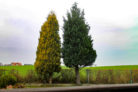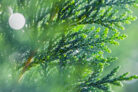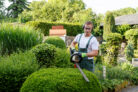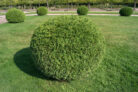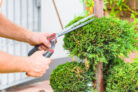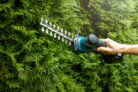
You’ve probably seen Thuja (Arborvitae) pruned into a “standard” or tree-form before. While it’s a popular look, this plant isn’t actually the most natural fit for that style. If you’re determined to give it a try, there are a few things you should know first. Here’s my guide on how to transform your Arborvitae into a stylish tree-form.
Is Arborvitae a good choice for a tree-form?
Because of its dense, evergreen growth, most people reach for Thuja when they want a privacy hedge. It’s definitely not the first plant that comes to mind for a standard. In fact, you should only attempt this look if your plant is in one of these two setups:
- As a standalone specimen in the yard
- In a planter or pot
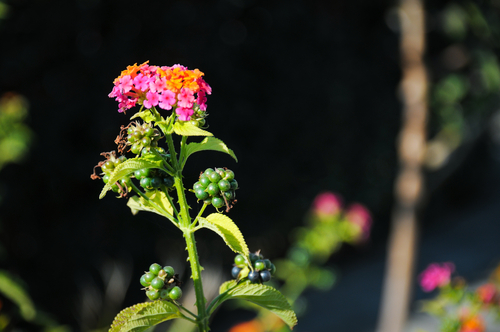
Even if your tree is standing solo, you don’t have to leave the ground bare! You can add some companion plants at the base. Just stick to small plants or flowers with shallow roots so they don’t compete with the Thuja’s own shallow root system. Plus, underplanting is a great trick to hide the base if your Arborvitae has started turning brown inside.
How to prune your Thuja into a tree-form
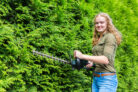
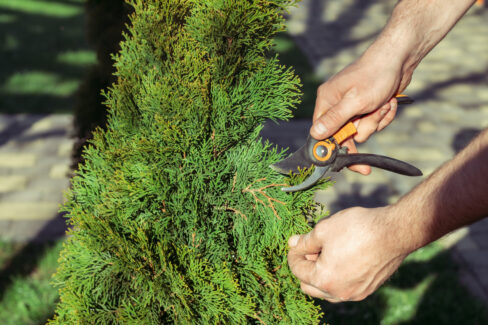
Just like a hedge, a tree-form Thuja usually only needs one major haircut a year. Spring is the absolute best time to do this. Try to pick a day that is overcast but dry. Direct sunlight on fresh cuts can cause brown tips, while excess moisture is an open invitation for fungal diseases. Here’s your step-by-step game plan:
- Safety first! Always wear long sleeves, gloves, a mask, and eye protection. Arborvitae is toxic and can cause nasty skin irritations or allergic reactions.
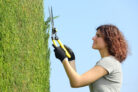
- Clear the trunk by trimming the side branches all the way back to the main stem. Keep in mind: Thuja won’t grow back from old wood, so once those lower branches are gone, they’re gone.
- Shape the top (the “crown”) into your desired look.
- If you’re going for a perfect sphere or cone, use a cardboard or wire template to keep your lines straight.
If the crown gets a little shaggy over the summer, you can give it a light “touch-up” trim. As long as your tree is healthy, you can toss the clippings right onto the compost pile. To help them break down faster, run them through a wood chipper first—just make sure you’re still wearing your safety gear when you do!