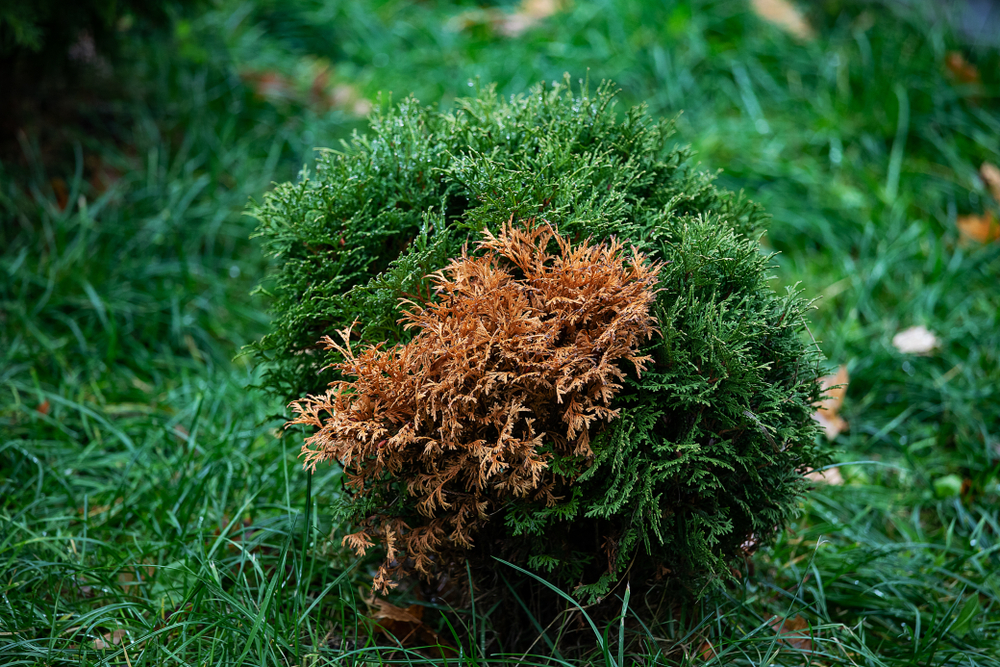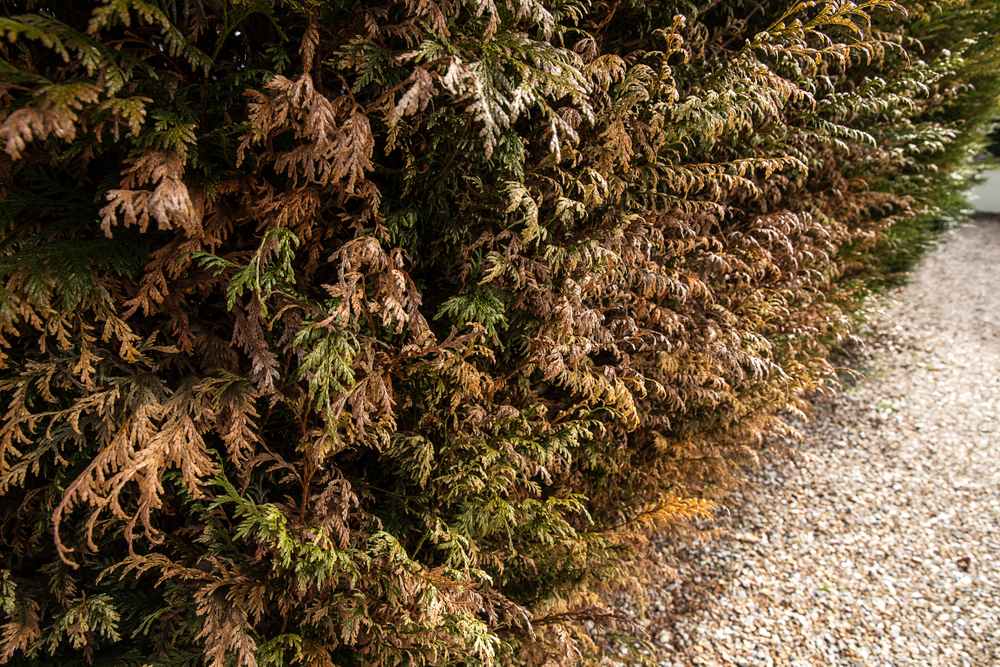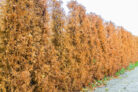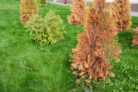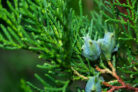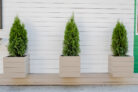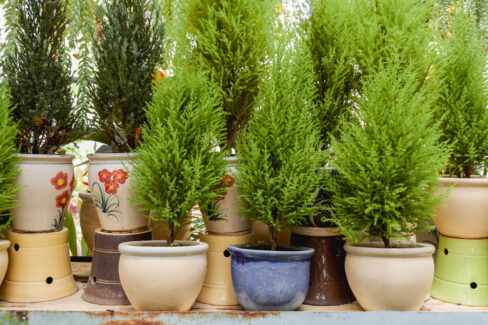
You’ll see Thuja (commonly known as Arborvitae) everywhere as privacy hedging, but the smaller varieties are actually fantastic for adding some greenery to a balcony or patio in containers. However, life in a pot is a bit tougher for these evergreens, and they tend to turn brown much faster if they aren’t getting exactly what they need.
Why is my potted Arborvitae turning brown?
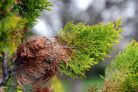
If you notice brown tips on your potted Arborvitae, it’s usually a sign that something is off. There are a few usual suspects to look out for:
- Soil is too dry
- Waterlogging (soggy feet)
- Improper fertilizing
- Sunburn or windburn
- Frost damage
- Fungal infections
- Pests
Avoiding common care mistakes
Most of the time, a potted Thuja turns brown because of watering issues. Unlike a hedge planted in the ground, a container plant dries out much faster. On the flip side, there’s a much higher risk of standing water, which leads to root rot. To prevent this, make sure you use a well-draining potting mix and add a drainage layer (like gravel or clay pebbles) at the bottom when planting. Water your Arborvitae regularly and never let the soil dry out completely. Also, skip the saucer under the pot so excess rainwater can flow away freely.
When it comes to food, Arborvitae are moderate eaters. While they do need more nutrients in a pot than in the ground, you should still be careful—never exceed the recommended dose of fertilizer. Another pro tip: only prune your Thuja on cloudy days to avoid “burning” the fresh cuts in the sun. Since container roots are more exposed, they need extra winter protection. Add a layer of mulch on top and wrap the pot in one of these to keep it cozy:
- Garden fleece or burlap
- A jute bag
- An old blanket
Spotting pests and diseases
Fungus usually moves in when things get too damp. To keep it at bay, try to water your tree at the base rather than from above, keeping the foliage and trunk dry. While these trees are pretty hardy against bugs, the Arborvitae Leafminer can be a real headache and can even kill the plant. These tiny larvae tunnel through the needles, leaving behind little tell-tale holes and waste. Unfortunately, they can be pretty tough to get rid of once they’ve moved in.