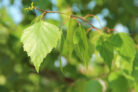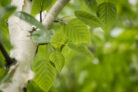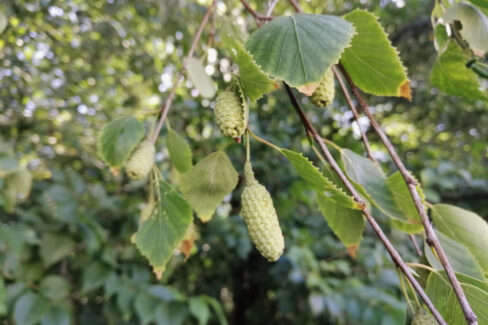
Don’t expect to find big, flashy “prizes” like acorns or chestnuts on a birch tree. Because they aren’t obvious at first glance, many people assume birch trees don’t produce fruit at all. But here’s the thing: wherever you find flowers and seeds, fruit is guaranteed to follow. Let’s take a closer look at the hidden life cycle of the birch.
No Blooms, No Fruit
A birch tree won’t produce fruit until it has successfully flowered. So, don’t be discouraged if your young birch doesn’t show much activity right after planting. Nature takes its time; a birch usually needs about five years before it’s mature enough to bloom for the first time. The flowering season typically kicks off in late March, peaks in mid-April, and wraps up by late May or early June.
Male and Female Flowers on One Tree
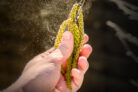
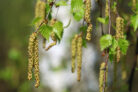
Birch trees are “monoecious,” which is just a fancy botanical way of saying that both male and female flowers live on the same tree. This setup makes reproduction and fruit production pretty efficient. You can easily spot the flowers because they grow in clusters called catkins:
- Male catkins: About 4 inches long, cylindrical, and a vibrant yellow.
- Female catkins: Shorter (about 1–1.5 inches), pale yellow-green, and turning light brown by summer.
Pollination: Blowing in the Wind
To turn those flowers into fruit, the tree needs to get fertilized. Instead of relying on bees or butterflies, the birch puts all its trust in the wind. This might seem risky, but since the flowering season lasts several weeks and the wind is always blowing somewhere, it works out perfectly. Birch pollen is incredibly light and fine—even the slightest breeze is enough to get it moving.
Pro Tip:
If you suffer from seasonal allergies, you might want to keep your distance during peak bloom. Birch pollen is a major allergen and can trigger some pretty nasty hay fever symptoms.
Harvest Time in the Fall
Once the spring blossoms fade, the fruit begins to develop. It matures throughout the summer and is finally ready for its big debut in September or October. When it comes to fruit production, the birch is definitely an overachiever—a single catkin can produce up to 450 individual fruits!
What Does Birch Fruit Look Like?
The fruiting bodies can be upright or drooping, covered in thick, leathery scales that don’t quite turn woody. The fruits themselves are tiny and lightweight, designed to be carried far away by autumn gusts. In the wild, this “quantity over size” strategy ensures the species survives. Technically, these fruits are winged nutlets (called samaras). Here is what to look for:
- The nutlets are only about 1/8 inch (3 mm) long.
- Each one has two thin, wide wings.
- These wings allow them to “sail” long distances on the wind.
- They are usually sandy or brownish in color.
Springtime Propagation
The birch relies entirely on its fruit to reproduce. Those winged nutlets carry the seeds on their windy journey. If a seed lands on a patch of open ground with plenty of sunlight, it will germinate the following spring. Birches aren’t picky; as “pioneer trees,” they are often the first to move into barren or poor-quality soil.
Growing a Birch from Seed
If you want a birch in your own backyard, you can always look for wild saplings in the spring. However, it’s also a fun project to grow one yourself from seed. Here’s how:
1. Fill small pots with a high-quality seed-starting mix.
2. Place one seed in each pot, about 1/2 to 3/4 inch deep.
3. Mist the soil gently with a spray bottle.
4. Place the pots in a bright spot, but keep them out of direct, scorching sunlight.
5. Keep the soil moist for 2–4 weeks. You should see sprouts appearing by then.
6. Once the seedlings reach about 6–10 inches tall, transplant them into nutrient-rich soil.
Are the Fruits Edible?
While birch sap is becoming a trendy health drink, the fruits themselves don’t have much nutritional value for humans and aren’t used in traditional medicine. You *can* make a soothing tea from the very young fruits, but the real “superfood” power of the birch lies in its leaves and buds. Starting in March, you can harvest the tender buds. They are packed with Vitamin C, flavonoids, and essential oils. Try tossing them into a salad or blending them into a green smoothie for a fresh, wild kick!