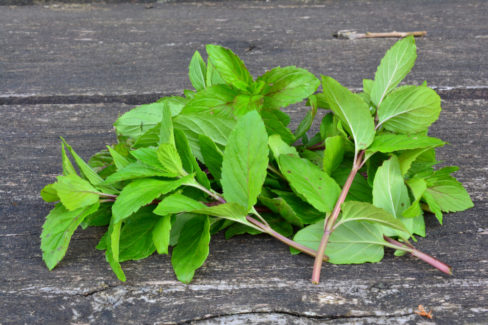
If you’re anything like me and love that refreshing, zesty aroma, you’re probably constantly “stealing” a few sprigs of mint from your garden or patio pots. But just because you’re snacking on it doesn’t mean you should skip a real pruning session! In fact, mint usually grows way faster than you can drink tea. Here is your guide to keeping your mint patch in tip-top shape.
Pruning for a Strong Start
Mint can start pushing out new growth as early as March. If you didn’t get around to “tidying up” the garden last fall, now is the time to clear out all those old, dead stems. This clears the runway so the fresh green shoots can really take off.
Pro Tip:
Early spring is also the perfect time to propagate your mint. Just dig up a bit of the root area, pull some runners away from the mother plant, and replant them in their new spot right away.
Harvesting for the Kitchen
From April through September, feel free to help yourself to those green stems. After September, the flavor starts to lose its punch. Plus, it’s best to leave the plant alone in the fall so it can store up energy for its winter nap.
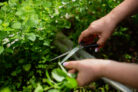
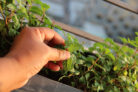
When you’re harvesting, don’t just pluck individual leaves off the stems—that leaves the plant looking “naked” and weak. Instead, snip off entire stems, leaving about 2 to 4 “eyes” (nodes) at the base. This encourages the mint to branch out and get nice and bushy.
The Big Summer Harvest
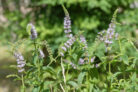
The window right before the plant blooms is a magical time for two reasons: First, after weeks of warm weather, the plant is huge. Second, the essential oils are at their peak, making the flavor more intense than ever. This is the time for a major haircut! You can save your bounty for winter by drying or freezing the clippings.
- Cut during the budding stage, just before the flowers open.
- Depending on the variety and the weather, this usually happens in June or July.
- Pick a sunny, dry late morning for the best flavor.
- If it’s cloudy but dry, an afternoon harvest works too.
- Cut the stems back by about half.
Pro Tip:
If you want to help out our local bees, leave a few stems to bloom. They absolutely love the scent and will flock to the flowers. You should also leave a few flowers standing if you’re hoping to collect seeds.
Keeping the “Beast” in Check
If your mint is starting to take over the entire neighborhood, that big pre-bloom prune is mandatory—even if you don’t plan to use the harvest. Toss the clippings in the compost or the green bin if you have to. This prevents the plant from setting seed and spreading even further.
In August or September, the mint will often try to bloom a second time, so be ready to grab your shears again.
Managing the Roots
Experienced gardeners don’t just prune the top; they use a spade to chop off the roots that try to creep horizontally across the garden. Even smarter gardeners install a root barrier when planting to save themselves the workout!
Pruning for Plant Health
Even though mint is pretty tough, it can occasionally deal with leaf spot, mint rust, or mildew. Because it’s such a fast grower, the best fix is usually to cut it back right to the ground as soon as you see signs of disease. Don’t compost these clippings—throw them in the trash so the fungus doesn’t spread.
Pro Tip:
To keep diseases from jumping from plant to plant, always use sharp, sanitized pruning shears.
Pruning Potted Mint
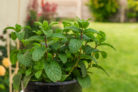
Since mint in a container grows just as vigorously as it does in the ground, you should follow the same pruning rules. The only difference? The pot acts as a natural “jail” for the roots, so you don’t have to worry about it conquering your entire yard!