To keep your exotic orchids happy and healthy, a regular trim is a must. When done right, pruning encourages vigorous growth and a massive flush of blooms. However, it’s easy to make a few mistakes if you aren’t careful. I’m here to show you exactly how to handle your shears like a pro!
Different Orchids Need Different Cuts
Not all orchids are created equal, so you can’t treat them all the same way. The main thing you need to know is whether you’re dealing with:
- Single-stem (monopodial) orchids
- Multi-stem (sympodial) orchids
Pruning Single-Stem Orchids
Some orchids grow from a single main stem. A great example is the Dendrobium orchid, which is a huge favorite for beginners. These types usually only bloom once per stem.
Once the stem has completely dried out and shriveled up after the flowering season, you can snip it off right above the base.
Pruning Multi-Stem Orchids
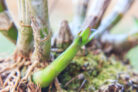
The most famous multi-stem orchid is the Phalaenopsis, or Moth Orchid. For these beauties, you’ll want to cut the spent flower stalks back by about a third. The sweet spot for the cut is just above the second or third “sleeping eye” (those little bumps or nodes on the stem). Cutting here can wake up those buds, and with a little patience, you’ll see new shoots popping up in the next growing season.
Pruning to Wake Up Dormant Buds
If your orchid seems stuck in a never-ending nap and isn’t putting out new growth, you can actually use pruning to give it a wake-up call. Cutting back green stems can stimulate those dormant eyes to produce strong new shoots or even fresh flowers. Don’t stress too much about the exact spot—it’s almost impossible to mess this up!
If you want a brand-new shoot, cut the old stem near the base. If you see several dormant buds on a stem, cutting above the second or third one is usually the best way to encourage new growth.
Removing Dried-Out Plant Parts
As your orchid goes through its life cycle, some parts will naturally wither and die. It’s totally normal! Here’s my rule of thumb:
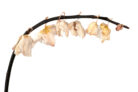
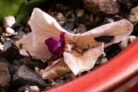
- Let wilted flowers fall off on their own, or give them a very gentle tug.
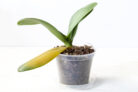
- Don’t cut yellow or wilted leaves; wait until they are ready to be plucked off easily.
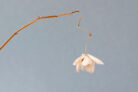
- However, if a flower spike is completely brown and crispy, go ahead and cut it off near the base.
Dried Flower Stalks
If a flower stalk is totally dried out, cut it off right at the base. This applies to both single-stem and multi-stem varieties. If the stem is only drying out from the top down, you can try cutting it back to the green part to see if it re-blooms. If it keeps browning after the trim, just take the whole thing off.
Trimming the Roots
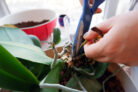
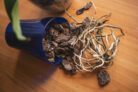
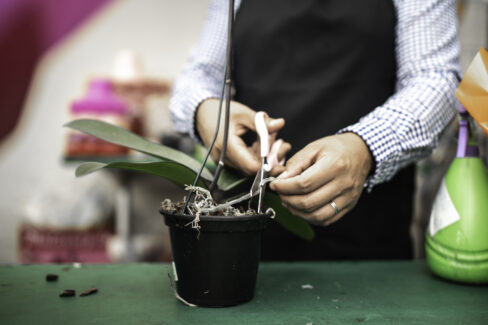
Part of good orchid care is a regular root trim. The best time to do this is when you’re repotting. You’ll want to snip away any old, dried-out, or mushy, rotten roots. Only keep the healthy, firm green ones.
Pro tip: If you aren’t sure which roots are healthy, dip the root ball in water or mist them. Healthy roots will turn a vibrant green, while dead ones will stay gray and brittle.
Never cut off healthy aerial roots (the ones growing out of the pot)! Even if they look a bit wild, they are essential for the plant’s nutrition. If your orchid is growing a ton of aerial roots, it’s usually a sign that it’s time to repot. When you do, try to tuck those upper roots into the new orchid bark.
Cutting Off “Keikis” (Baby Orchids)
Many orchids produce “kindel” or “keikis”—little baby plantlets that grow on the stems. Once these babies have two to four roots (about an inch long) and at least two leaves of their own, you can snip them off and give them their own pot.
Alternatively, you can leave the keiki on the mother plant. It looks stunning when both bloom at the same time! Just make sure to use a stake to support the extra weight so the stem doesn’t snap.
Pruning Garden Orchids
If you’re growing hardy outdoor orchids like Lady’s Slippers or Marsh Orchids, you can follow the same general rules you use for other perennials:
- The best time to prune is before the first frost hits.
- Only remove leaves and stems once they have completely died back.
- If you’re growing them in pots, cut the stems all the way back to the soil level.
The Right Tools for the Job
Whether you’re trimming a flower spike or cleaning up roots, your tools (shears or a knife) must be clean and disinfected. This prevents pests or bacteria from entering the “wound” and making your plant sick.
Disinfecting the Cuts
It’s a good idea to treat the fresh cuts on stems or roots to prevent infection. Believe it or not, cinnamon or charcoal powder works wonders for this! Just a little dab on the cut end acts as a natural sealer.