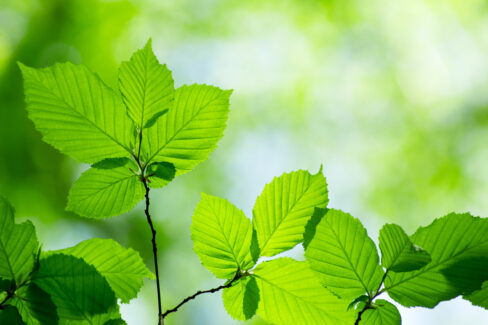
Ever wonder how many leaves are on a full-grown beech tree? Honestly, we’ll probably never know for sure—I don’t think anyone has the patience to count that many! Instead of getting bogged down in the numbers, let’s talk about what makes these leaves so special, from their seasonal glow-up to their hidden perks.
It’s Leaf Season!
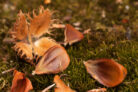
Beech trees are deciduous, meaning they swap out their “outfit” every year. But here’s a fun fact: the calendar year doesn’t always match up perfectly with when the leaves fall. You might notice your beech tree in winter still holding onto a bunch of dried, brown leaves. They usually cling to the branches until the fresh green buds push them out in the spring.
- Beech trees typically leaf out in late April, right along with their flowers.
- In a warm spring, you might see green as early as March.
- If it’s a cold year, they might hit the snooze button for a bit.
- The big leaf drop usually starts between late October and early November.
Quick Tip:
Try to leave those fallen leaves right where they land! As they break down, they turn into amazing natural fertilizer for the soil. It’s a win-win: less yard work for you, and you won’t have to fertilize your beech tree manually.
What Do Beech Leaves Look Like?
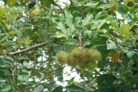
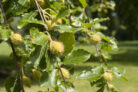
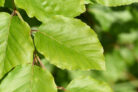
When we talk about beech trees in our neck of the woods, we’re usually talking about the European Beech (Fagus sylvatica). While other species exist, this is the classic one you’ll see most often. Here’s how to identify a standard beech leaf:
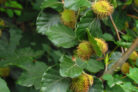
- Oval or egg-shaped with a pointed tip.
- The base is either rounded or slightly wedge-shaped.
- They’re usually 3 to 4 inches long and about 2 inches wide.
- The edges are wavy and slightly “toothed” (serrated).
- The undersides and the short stems (about half an inch long) are often a bit fuzzy.
Heads Up:
If the leaves are smaller and have much sharper, jagged edges, you might actually be looking at a Hornbeam. Despite the name, it’s not a true beech—it’s actually part of the birch family!
A Year of Color
One of the best things about the beech tree is how it changes its look throughout the seasons:
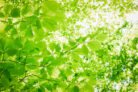
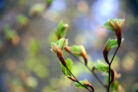
- Spring: The new growth is a delicate, almost pale lime green.
- Summer: The foliage turns a deep, glossy dark green.
- Autumn: This is when the show starts! The leaves shift from soft yellow to vibrant orange and finally a rich reddish-brown.
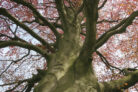
- Winter: The leaves dry out but often stay on the branch, keeping that rustic reddish-brown hue until spring.
When Things Don’t Look Right
If you notice your beech leaves curling up, getting spots, or dropping way too early, your tree is trying to tell you something. Usually, it’s a water issue—either too much (soggy roots) or not enough (drought stress). Sometimes, though, diseases like fungi or certain pests can be the culprit behind leaf damage.
Did You Know You Can Eat Them?
As long as the leaves are healthy and haven’t been sprayed, you can actually eat them! If you pick the young, tender leaves right when they sprout in the spring, they have a lovely, mild flavor. They make a great, “wild” addition to a fresh spring salad.