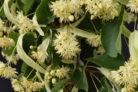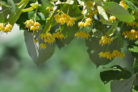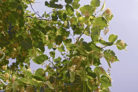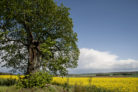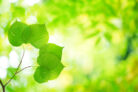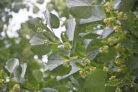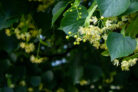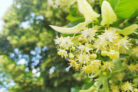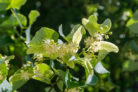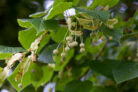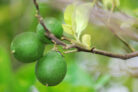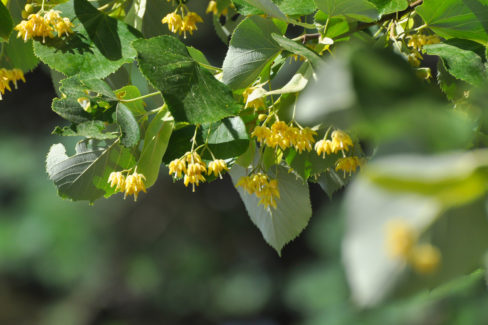
The Large-Leaved Lime (or Summer Linden) is famous for its striking green foliage. These leaves aren’t just a great way to tell this tree apart from its cousin, the Little-Leaved Lime; they’re also a favorite in natural medicine and surprisingly versatile in the kitchen!
Leaf Characteristics
If you’re looking at a Large-Leaved Lime, here’s what you’ll notice about its foliage:
- They have a classic heart shape that tapers to a sharp point.
- The leaves sit on relatively short stems (petioles).
- They can get pretty big, reaching up to 6 inches in both length and width.
- The edges are sharply toothed (serrated).
- The tops are a vibrant green, while the undersides are a bit paler and dotted with tiny white tufts of hair.
- These trees are deciduous, meaning they turn a beautiful yellow in the fall before dropping their leaves for the winter.
Summer vs. Winter: Telling Your Lindens Apart
The Large-Leaved Lime is one of several Linden species native to Europe, and it often gets confused with its close relative, the Little-Leaved Lime (Winter Linden). However, if you look closely at the leaves, you can easily tell who’s who.
The Large-Leaved Lime (Summer Linden)
- The leaves are significantly larger than those of the Little-Leaved Lime.
- Even the leaf stems are fuzzy/hairy.
- The top is green, and the bottom is a lighter shade of green.
- You’ll find tiny white tufts of hair on the undersides.
The Little-Leaved Lime (Winter Linden)
- These leaves are much smaller.
- The top side isn’t hairy; instead, it feels slightly leathery.
- While the top is green, the underside has a distinct blue-grey tint.
- Instead of white tufts, the undersides feature brownish hairs.
The Pro Tip for Identification
The absolute best way to tell them apart is to flip a leaf over. It’s all about the color and the “fuzz.” If you see white tufts, you’re looking at a Large-Leaved Lime. If the hairs are brown, it’s a Little-Leaved Lime.
Fall Colors and Leaf Drop
Since the Large-Leaved Lime is deciduous, it puts on a show before winter hits. The leaves turn a brilliant, eye-catching yellow before falling off completely. Come springtime, fresh green leaves will burst forth from the small buds to start the cycle all over again.
How to Use Linden Leaves
Did you know these leaves are a staple in natural wellness? They are highly regarded for helping with respiratory issues and the common cold. When paired with linden flowers, you can whip up soothing teas, compresses, or even essential oils.
But wait—there’s more! You can actually eat linden leaves raw. Just give them a good wash and toss them into a fresh green salad for a tasty, unique twist. Just a heads-up: stick to the leaves themselves and discard the tough stems, as they aren’t great for snacking.
The Sticky Situation: Honeydew
If you’ve ever parked under a linden tree, you might have noticed a sticky film on your car. This is “honeydew,” produced by aphids that love to hang out on the leaves. When the aphid population booms, the honeydew starts dripping onto sidewalks, bikes, and cars. It can be a real pain to scrub off your paint job, so you might want to check the branches before you park!