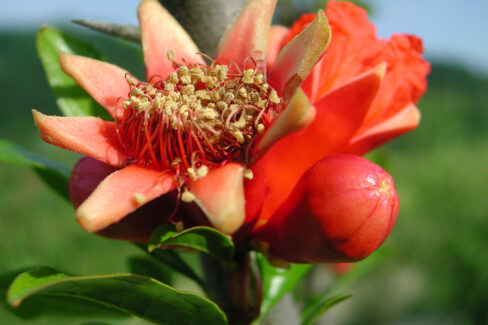
Pomegranates definitely crave the heat, but don’t let that stop you—you can absolutely grow them right here at home! The secret to success lies in picking the right variety or simply keeping your little trees in pots so you can bring them indoors when the frost hits.
Growing Pomegranates in Containers
In the wild, pomegranate trees can reach anywhere from 10 to 16 feet tall. However, if you’re working with a patio or balcony, there are fantastic dwarf varieties available. They produce smaller fruit, but they are perfectly sized for containers. The best part? It makes overwintering them indoors a total breeze.
When fall rolls around, make sure to harvest any remaining fruit just before the first frost. Pomegranates usually won’t continue to ripen once they’re moved into winter storage, and leaving them on the branch just drains the tree’s energy. By this time, your tree will likely have already dropped its leaves.
One of the perks of overwintering pomegranates is that they actually prefer a dark spot compared to other plants. Aim for a cool room between 35°F and 45°F. During this dormant phase, go easy on the watering and skip the fertilizer entirely. Come February, move your tree to a brighter spot so it can wake up, get used to the light, and start pushing out new growth before heading back outside in mid-May.
Growing Pomegranates Outdoors
If you live in a milder climate, you can try planting your pomegranate directly in the ground. Just keep in mind that even “hardy” varieties aren’t completely winter-proof. They’ll need some serious protection, especially during their first few years. Choosing the right cultivar is key here; heat-loving varieties simply won’t survive a chilly winter, even in the best-protected spots.
Great varieties to try:
- Gabes
- Russian 26
- Salavatski
- Tirol
- Usbek
Even with these cold-tolerant types, your harvest really depends on the summer weather. If it’s a particularly rainy or cold summer, you might not get much fruit. To give your tree the best shot at both a good harvest and surviving the winter, always plant it in a sheltered spot, like against a south-facing wall.
Winter Protection
A pomegranate tree in the ground can usually handle temperatures down to about 14°F. Once it gets colder than that, even protected plants can suffer some pretty major damage.
To help your “hardy” plants make it through, you’ve got to bundle them up before the first hard freeze. Wrap the trunk in coconut fiber mats or burlap sacks, and cover the crown with a high-quality winter fleece. Trust me, your tree will thank you when spring arrives!