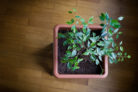
You don’t necessarily need an English Ivy in every corner of your house, but if there’s one room that truly benefits from this leafy climber, it’s the bedroom. Not only does ivy thrive in the typical bedroom environment, but it also brings a major “superpower” to the table that makes it a total game-changer for your sleep space.
The “Secret” Power of English Ivy
You can’t tell just by looking at it, but scientific studies have proven that English Ivy is a heavy hitter when it comes to air purification. We’re not just talking about filtering out a little dust, either. Ivy actually scrubs the air of toxins that are harmful to humans, including:
- Benzene
- Formaldehyde
- Toluene
- Xylene
Even better? This climbing plant is incredibly effective at trapping mold spores—something none of us want to be breathing in while we snooze.
The Cleaning Power by the Numbers
If you’re wondering just how effective ivy really is, check out these impressive stats:
- It can filter up to 94% of various airborne pollutants.
- In just 12 hours, it can remove up to 80% of mold spores from the air.
Pollutants are Everywhere
In our modern world, it’s almost impossible to avoid indoor pollutants. They off-gas for years from furniture, carpets, and paint. Plus, every time you open a window, car exhaust and city smog can drift inside. Most bedrooms are affected by this to some degree. Since potted ivy is so easy to grow, it’s a simple, natural way to keep your air fresh.
Setting Up and Caring for Your Ivy
Most of us prefer a bedroom that stays a bit cooler and away from direct sunlight—which is perfect, because ivy loves the shade. This makes the bedroom an ideal location. Just a heads-up for the winter: keep your plant away from hot radiators. Dry heat is an invitation for pests like spider mites and aphids. An infestation won’t just cause yellow or brown leaves; a sick plant can’t do its job as an air purifier.
Here’s how to keep your natural air filter happy:
- Water it as soon as the top layer of soil feels dry.
- Avoid standing water (nobody likes soggy feet!).
- Fertilize every two weeks with a diluted universal fertilizer.
- Prune it back whenever it gets too wild.
- Repot it regularly to give the roots room to grow.
Quick Tip:
If your bedroom air gets dry in the winter, give your ivy a regular misting or use a humidifier to keep the humidity up.
A Quick Safety Note!
While English Ivy is a dream for allergy sufferers, it’s important to remember that the plant is toxic. If you have curious toddlers or pets who might try to eat the leaves, it can be dangerous. The small berries found on mature plants are particularly tempting and highly poisonous. Always make sure to place your ivy in a spot where little hands and paws can’t reach it!