Even the most low-maintenance ivy eventually gets tired of old, worn-out soil. Plus, when those roots start cramming into every single cubic inch of the pot, it’s definitely time to upgrade to a bigger home. To make sure your ivy stays happy and thriving, I’ve rounded up the most important tips for a successful repotting session.
Timing and How Often to Repot
If you have a young potted ivy, you’ll want to repot it every single year. It doesn’t matter if your ivy is in the bedroom, outside on the balcony, or anywhere else—fresh space is key for growth. For older plants, you can stretch the interval to every two years, though they’ll still love you for doing it annually if you can. At the very least, once you see roots poking out of the drainage holes, you can’t ignore that “cramped” look any longer!
Potted ivy takes a little breather during the winter, even as a houseplant. The best time to repot is in early spring, right before it kicks back into its fast-growing phase.
Pro Tip:
If your ivy is struggling with a disease, a pest infestation, or the soil is waterlogged, you might need to repot it immediately to save the plant. In those cases, don’t wait for spring—act fast!
Choosing the Perfect Pot
When picking out a new home for your ivy, look for these features:
- A diameter about 1 inch (2-3 cm) larger than the current pot.
- Multiple large drainage holes.
- No saucer (if it’s staying at an outdoor location).
- Window boxes and hanging baskets work great, too!
If you want to let your ivy climb, make sure the pot is sturdy enough to hold a trellis or support. You might need a slightly larger or deeper pot to keep everything stable. Once your ivy reaches a massive planter size, you can stop upgrading the pot and just refresh the top layers of soil instead.
Soil Preferences (Keep it Simple!)
Ivy isn’t picky about nutrients, so almost any potting mix will do. The main goal is a soil that holds some moisture but still drains well. Adding a bit of perlite or pumice helps maintain even moisture, while adding sand can improve drainage.
Pro Tip:
Hold off on fertilizing your ivy for several weeks after repotting. Fresh potting soil usually has plenty of nutrients to keep it fed for a while.
How to Repot Your Ivy Like a Pro
It’s easiest if you can move the ivy along with its existing trellis. If not, you’ll need to “gently” untangle it first.
- Start by pruning the ivy into your desired shape.
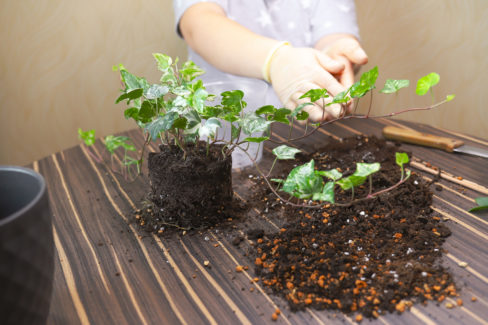
- Carefully remove it from the old pot and shake off as much of the old soil as possible.
- If you’re reusing the same pot (just changing the soil), make sure to give it a thorough cleaning first.
- Plant your ivy in the new container and press the soil down firmly.
- Give the plant a good watering to help it settle.
- If needed, set up a new trellis and loosely secure the vines until the plant’s aerial roots can grab hold on their own.