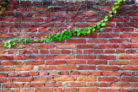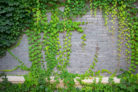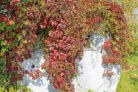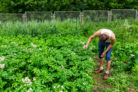
Anyone who’s ever tried to clear ivy out of their yard knows the struggle. It’s never just a “quick weekend project.” You’re looking at endless vines to rip out and deep, stubborn roots that seem to go down to the center of the earth. It’s back-breaking work that eats up your free time, so it’s totally natural to go looking for a “magic potion” to make the job easier.
A Look at the Store Shelves
When ivy wears out its welcome or starts taking over your entire garden, it officially crosses the line into weed territory. If you head to the garden center, you’ll find rows of weed killers—some organic, some packed with heavy-duty chemicals. Most of these aren’t specifically designed for ivy; they’re broad-spectrum killers meant for any unwanted greenery. My advice? Read that fine print carefully so you know exactly what you’re putting into your soil.
The Deal with Roundup
You’ve probably heard of Roundup. It’s one of the most common weed killers people recommend for ivy. The name sounds simple enough, but the active ingredient is glyphosate. There are just too many red flags regarding glyphosate to ignore—it can really mess with your soil health and groundwater. In my opinion, it’s just not something that belongs in a home garden.
Plus, here’s the kicker: Roundup usually only kills the leaves. Ivy roots are incredibly resilient and often survive the treatment. Before you know it, you’ll see new sprouts popping up again. Most chemical sprays are just too superficial to reach those deep ivy root systems. And let’s not forget—you risk killing off your favorite neighboring plants in the process.
Getting Rid of Ivy the Old-Fashioned Way
I hate to be the bearer of bad news, but there’s really no shortcut. To truly get rid of ivy, you’ve got to roll up your sleeves and do it by hand.
- Cut back all the vines and pull them out.
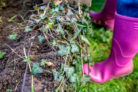
- Dig out the main root balls.
- If you want to be thorough, sift through the soil for leftover bits.
- Don’t leave any scraps behind; dispose of the ivy completely.
- Keep it off the compost pile!
- Even small vine pieces with “clingy” roots can restart, and leftover seeds will sprout.
Quick Tip:
You might see “DIY” home remedies involving lots of salt. Skip those. Salt won’t kill the deep roots entirely, and it ruins your soil for future plants while leaching into the groundwater.
Starving Out the Roots
If you’re dealing with an ancient ivy plant with massive, deep roots—especially one growing up a house wall—digging it out might feel impossible. This is where patience becomes your best tool. Cut the ivy all the way down to the ground. After that, keep a close eye on it and snip off any new green growth immediately. Eventually, the root system will run out of energy, weaken, and finally give up the ghost.