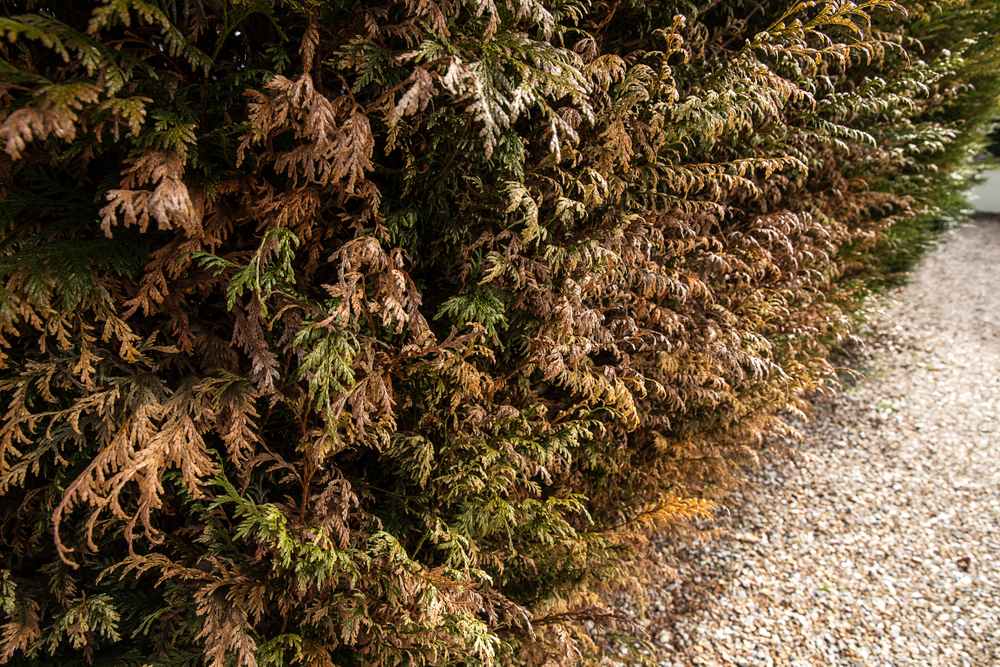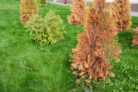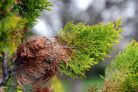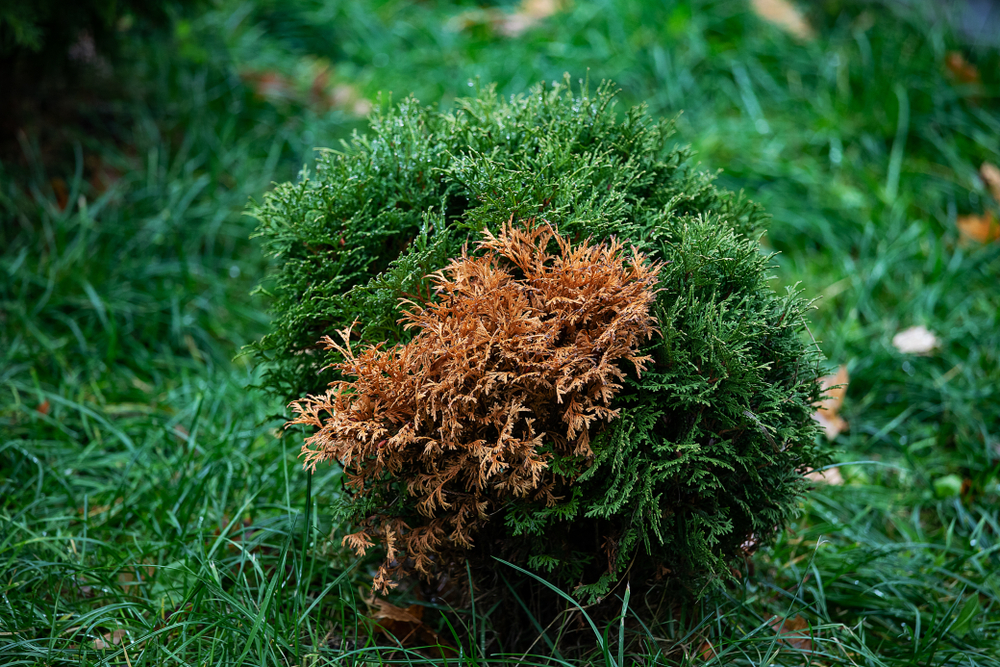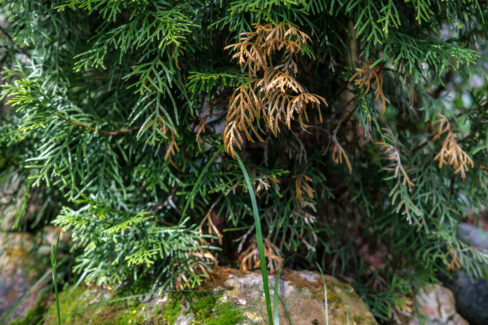
If you notice black needles on your Thuja (Arborvitae), it’s a major red flag that something is off. Usually, this points to a specific nutrient deficiency, but sometimes a disease is the culprit. Either way, you’ll want to jump into action pretty quickly to save your greenery.
What’s missing when Thuja tips turn black?
While yellow or brown tips on an Arborvitae are usually caused by general maintenance slip-ups, black shoots specifically signal a manganese deficiency. Interestingly, there’s usually plenty of manganese in the soil already—the plant just can’t get to it. This usually happens because of:
- Waterlogging (soggy feet)
- Soil that is too acidic
- Soil that is too compacted
Even though Thuja hedges love moist soil, there is such a thing as “too wet.” If the ground stays saturated, root rot sets in, making it impossible for the plant to soak up water or nutrients. Plus, if your planting site has very acidic soil, the plant actually needs even more manganese than usual to stay healthy.
How to treat black needles caused by manganese deficiency
To help your Arborvitae bounce back, your first step is to loosen up that soil. Try mixing in some fine gravel to help with drainage. You can also add lime to raise the pH level, which helps lower the plant’s manganese demand. Unfortunately, you can’t save the parts that have already turned black, so go ahead and prune those off. As long as you’ve ruled out a fungal disease, those clippings are perfectly fine to toss in your compost pile.
Which diseases cause black shoots on Arborvitae?
Arborvitae are generally pretty tough plants, but they aren’t totally immune to fungi—especially if they’re feeling a bit stressed or neglected. Fungi thrive in damp, stagnant conditions. That’s why you should always water your Thuja at the base, keeping the branches and trunk as dry as possible.
Certain fungi can turn your hedge a very dark brown or almost jet black. You might even see tiny black spots depending on the specific infection. If you catch it early, a heavy pruning of the affected branches can often save the tree. However, if the fungus has really taken over, it can be a much tougher battle to win.