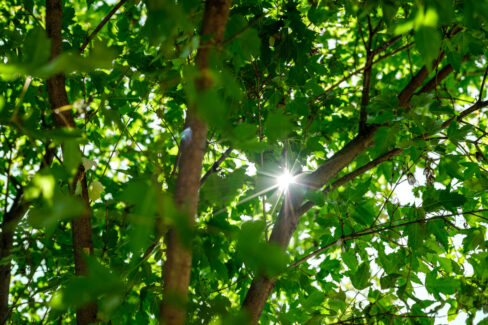
Massive beech trees aren’t just lucky flukes of nature. With their natural vigor and sheer toughness, pretty much any beech has the potential to reach a towering stature. Unfortunately, many of these trees never get to fulfill their genetic destiny—or they only get to enjoy their full size for a short time before they’re harvested for their high-quality wood.
Beech Tree Size: By the Numbers
Experts have crunched the data from countless measurements, and here’s how the beech stacks up:
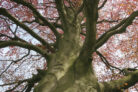
- Beech trees can soar up to 130 feet (40 m) tall.
- Most typically settle in between 65 and 100 feet (20–30 m).
- Exceptional specimens have been known to hit nearly 150 feet (45 m).
- The canopy is incredibly expansive, capable of shading up to 6,500 square feet (600 sq m).
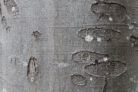
- The trunk reaches an average circumference of about 6.5 feet (2 m).
Pro Tip:
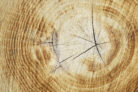
Want to guess how old a beech tree is? Here’s a quick trick: Measure the trunk circumference at a height of 3 feet and again at 5 feet, then find the average. Take that average (in centimeters) and multiply it by 0.6. The result will give you a solid ballpark estimate of the tree’s age.
Location is Everything
A beech tree’s “look” depends entirely on its neighborhood. If it’s growing in the middle of a dense forest, protected by its peers, it tends to grow slim and tall as it races for the sunlight. However, if you find one standing alone in an open field, it will likely stay shorter but develop a much wider, more dramatic crown.
Because of their massive height and sprawling canopy, beech trees aren’t exactly “backyard friendly” for the average suburban lot. Unless, of course, you grow them as a hedge and keep them in check with regular pruning. For large estates or public parks, though, a freestanding beech is a magnificent choice.
Growth Patterns and Reaching Maturity
In its youth, a beech tree is quite the overachiever, growing about 20–24 inches in height and 16–20 inches in width annually, while adding about 0.4 inches to its trunk girth. They are generally considered “full grown” by age 100 to 150, though you’ll notice their vertical growth slows down significantly once they hit the century mark.
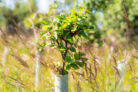
Interestingly, young beeches are masters of patience. Seedlings on the forest floor can stay tiny for years, surviving in the deep shade of their mother tree. They’re essentially lying in wait for the “big one” to fall. Once a gap in the canopy opens up, they use their head start to outpace fast-growing pioneers like birch trees, finally claiming their spot in the sky.
The Beech as a Bonsai
Whether a beech tree *wants* to stay tiny is up for debate, but they are actually fantastic candidates for bonsai training. With the right pruning techniques, you can keep this giant in a small pot—where it can only dream of the 130-foot heights its cousins reach in the wild.