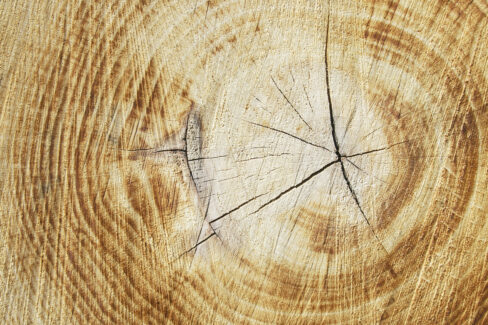
While a tree’s crown can take on all sorts of shapes, the trunk is usually much more consistent. Even so, you can identify most tree species just by looking at their bark. Take the beech tree, for example. Most nature lovers are so focused on leaves and flowers that they overlook the trunk entirely, but it’s actually one of the tree’s most unique features.
A Signature Color Palette
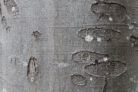
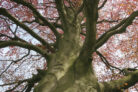
When it comes to color, a beech tree’s trunk goes through two distinct phases. A young sapling starts out with a dark green, almost blackish trunk. This deep color sticks around for a few years after planting. As the tree matures, the bark gradually lightens until it reaches that iconic, elegant silver-gray tone we all recognize.
Quick Tip:
Did you spot a tree that looks like a beech but has brownish, cracked bark? You’re likely looking at a Hornbeam. Despite the name, this member of the birch family is often confused with the European beech, even though there are plenty of differences between them once you know what to look for.
Why Beech Bark is Special
Like every tree, the beech is protected by its bark. However, unlike many other species, beech bark stays incredibly thin throughout its entire life. Even when the tree reaches an impressive size, it doesn’t develop thick, rugged, or peeling bark. It remains thin and remarkably smooth, interrupted only by the occasional “eye” or scar where an old branch used to be. When the outermost layer of the bark dries out, it turns into a fine gray dust. This dust falls to the forest floor, where it quickly decomposes into nutrient-rich soil.
Why Do Trunk Heights Vary?
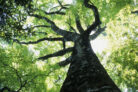
If you see a beech in a dense forest, it usually has a very long, clear trunk. But if you find one standing alone in a field, the branches often start very low to the ground. Why the difference? Because the bark is so thin, beech trees are actually prone to “sunburn.” A low-hanging crown provides the trunk with the shade it needs to stay healthy. In the forest, smaller shrubs and neighboring trees act as a sunblock, allowing the beech to stretch upward toward the light without getting scorched.
Using Trunk Diameter to Guess Age
A fully grown beech tree can reach an average diameter of about 6.5 feet (2 meters)—definitely too big to wrap your arms around! If you have a flexible measuring tape, you can actually get a good estimate of the tree’s age.
- Measure the circumference at a height of 3 feet and 5 feet.
- Average those two measurements (in centimeters).
- Multiply the average by 0.6.
- The result is the approximate minimum age of the tree.
- Keep in mind the tree might be even older, as growth eventually slows down significantly.
Pro-Tip:
Beech wood is highly prized in woodworking for its beautiful reddish shimmer. Next time you’re browsing a furniture store, keep an eye out—that polished tabletop might have once been a majestic beech trunk!